
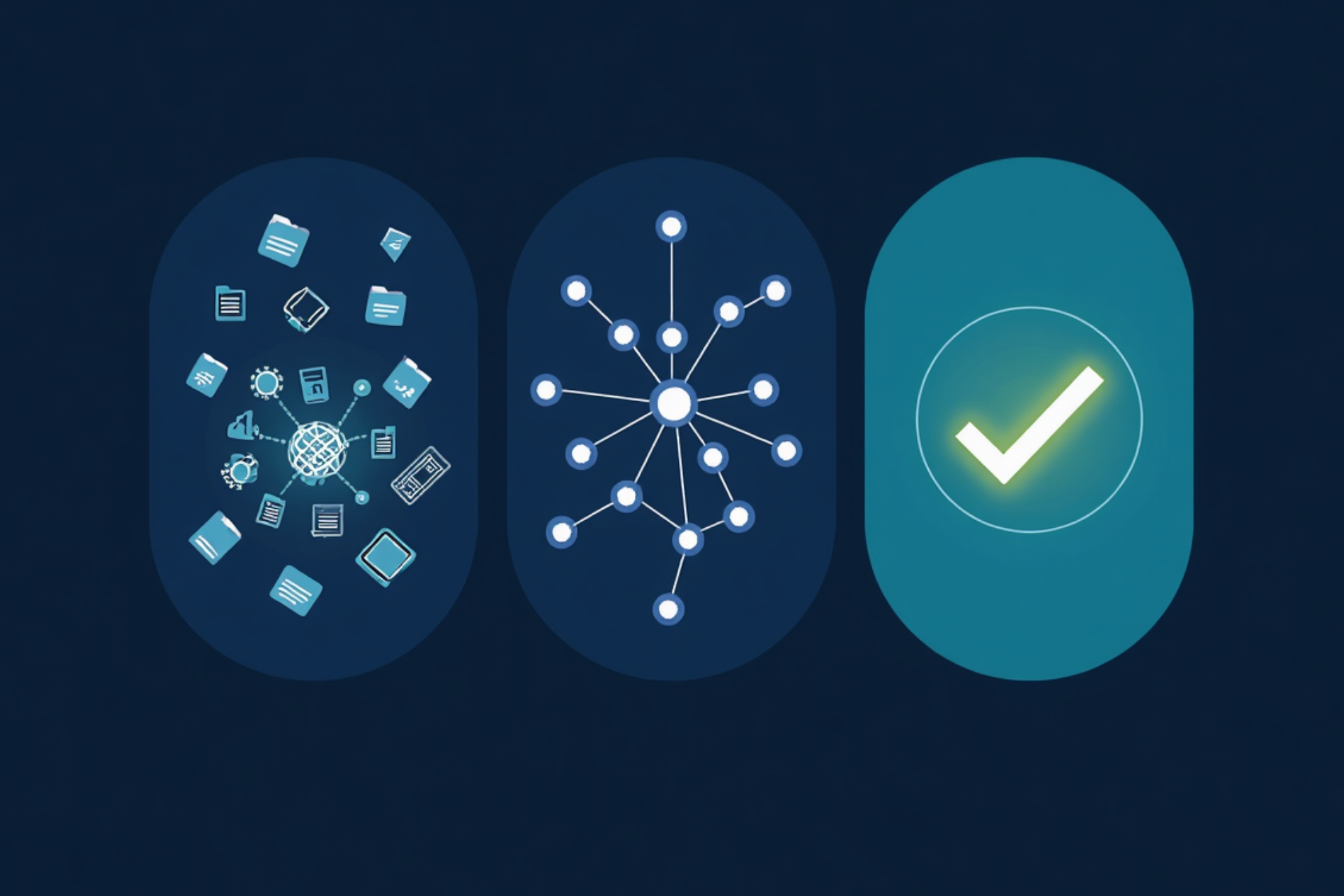
The three categories are often treated as interchangeable. They are not. Each was designed to solve a different problem, and understanding where each one stops is more useful than any vendor comparison.
This is not an argument for one over another. BaaS and DRaaS both have legitimate use cases. The point is that choosing between them requires knowing what each actually does – because the gap between what a technology leader believes they have and what they actually have is where recovery risk accumulates.
What Backup-as-a-Service is designed to do
BaaS focuses on data protection: creating, storing, and managing copies of data in a managed or cloud-hosted environment. It answers the question: do we have a copy of the data?
Done well, BaaS provides reliable, scheduled backup execution, offsite or cloud storage, retention management, and basic restore capability. It removes the operational burden of managing backup infrastructure and provides a degree of protection against data loss from hardware failure, accidental deletion, or localised incidents.
What it does not do is validate recovery. BaaS confirms that backup jobs completed. It does not confirm that the data can be restored to a working state within a defined timeframe, that the recovery sequence across interdependent systems is documented and tested, or that the process would hold up under the conditions of a real incident. As covered in Recoverability vs Backups, backup completion and recovery capability are fundamentally different things.
Backup stores data. It does not restore operations.
That distinction is not a criticism of BaaS. It is a description of what the category was designed to deliver. The problem arises when organisations treat BaaS as a recovery solution rather than a data protection one.
What DRaaS is designed to do
Disaster Recovery as a Service focuses on infrastructure continuity: replicating systems and enabling failover to an alternate environment when primary infrastructure becomes unavailable. It answers the question: can we keep systems running if the primary environment fails?
Done well, DRaaS provides rapid failover capability, replication of virtual machines or workloads to a secondary site, and defined recovery time objectives for infrastructure availability. For organisations with specific uptime requirements, it is a legitimate and valuable solution.
What DRaaS typically assumes is that the data layer is intact. Failover moves the infrastructure. It does not validate whether the data those systems depend on is complete, uncorrupted, or recoverable at the application level. In a ransomware scenario – where attackers increasingly target backup infrastructure before triggering the main encryption event – infrastructure availability does not equal operational recovery. The IBM Cost of a Data Breach 2025 found that organisations with compromised backup environments faced significantly longer recovery timelines regardless of their failover capability.
DRaaS moves servers. It does not always restore data.
This is not a failure of DRaaS. It is a category boundary. DRaaS was designed for infrastructure continuity, not for validated data recovery at scale.
Where Data Resilience sits in relation to both
Data Resilience as a category is focused on a different outcome: recovery certainty. Not whether data exists, and not whether infrastructure can fail over, but whether the organisation can restore critical operations quickly, predictably, and in a documented and accountable way when an incident occurs.
That requires several things neither BaaS nor DRaaS individually provides: recovery validation through timed, documented, multi-system recovery tests; data integrity assurance through immutable copies that cannot be compromised; recovery sequencing through a defined and tested order in which interdependent systems are restored; and accountability through a defined owner for recovery outcomes.
The conceptual distinction is straightforward. Backup stores data. Resilience restores the business. The operational gap between those two outcomes is what data resilience as a category exists to close.
Why the distinction matters for a technology leader
The question is not which category is better. The question is what your organisation actually needs to be able to answer when recovery is put under pressure.
If leadership asks how long recovery would take, the answer needs to come from a timed test – not from an assumption about BaaS restore speeds or DRaaS failover objectives. If an insurer asks whether recovery has been documented and validated, backup job completion reports do not satisfy that question. If an incident occurs and systems need to come back in a specific sequence across a hybrid environment, neither BaaS alone nor DRaaS alone provides the governance layer that makes that happen reliably.
Many organisations have BaaS. Some have DRaaS. Fewer have tested whether what they have would produce a working recovery under realistic conditions. The Recoverability Readiness Checklist is a practical starting point for understanding where your organisation actually stands across the five dimensions that define genuine recovery readiness.
That gap is not a technology problem. It is a category problem – and it is worth resolving before an incident makes it concrete.
If you are working through where your current setup stops, we are happy to help you map it out.